
Demystifying The Mystery Of Radiator Valves
Few things strike fear into the hearts of men up and down this country than the unknown nature of radiator valves. These valves hold the same intrigue and confusion as the thermostat and timer for your central heating and the numbered knob inside the fridge. And while I can easily tell you that the numbers in the fridge equate to power (5 is the most powerful, and therefore the coldest). The radiator valve is proudly standing tall in our rooms, mocking us for not knowing what to do with it.
Bar knowing that righty is tighty, and lefty is indeed loosey. What should every man know about their radiator valves to finally master them once and for all? Well, I’m about to blow your mind by demystifying the mystery of radiator valves.
You Never Want To See 5
Do you know that scene at the beginning of Back To The Future? Where Marty McFly plugs a guitar into an amp, cranks the dials right up, and then get flung back after just one strum! That will never happen with radiator valves. But you never ever want to see a radiator valve turned all the way up to five.
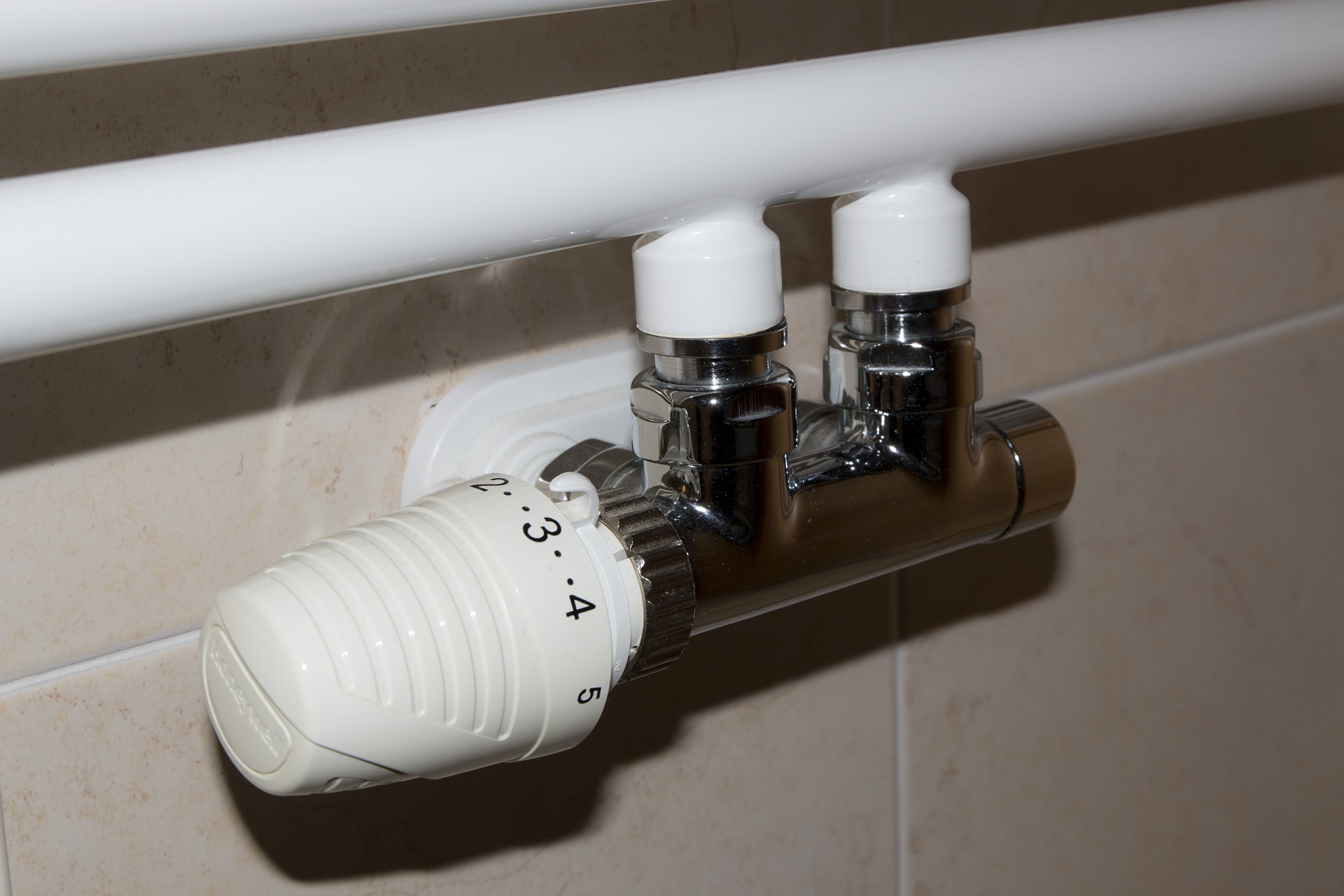
Numbered valves are also called thermostatic valves (TRVs, for short). A TRV is trying to keep a radiator at a constant temperature (that is what thermostatic stands for). The higher the number is set, the wider you leave the opening in the connection. Having it as wide open as possible means the radiator is working as it should, right?
I’m afraid not. Radiators are such simple pieces of kit that not knowing how your TRV is supposed to operate is a bit like going outside and turning the car on an hour before you’re going anywhere, i.e. it will waste fuel and money. Keep those valves down low. I mean as close to 1 or 2 as possible. The number on the valve corresponds to a specific temperature range. It varies based on the manufacturer for the simple reason that you can pop a TRV on almost radiator.
TVR Temperature
A rule of thumb is that whatever the number you have the TRV set to, multiple it by 7 to get your degrees Celsius. So, while that makes a valve set to 2 sound ideal for having your living room be 14°C in the evening. Would you want other rooms around the house set to 5 and your TRVs thinking you want the room to be 30-35°C every night? Dial it back, and bar one or two rooms that always have trouble keeping warm. You won’t notice a major difference when the valve is down low. Play about with them too much and you could end up having to re-balance all your radiators from tinkering with the flow between them too much.
You need to know your directions
Can you tell the difference between angled, corner, and straight valves? Because you should. Go look at a radiator right now! See how the pipe from the floor meets the valve at 90 degrees to make what looks like a corner? Yep, you guessed it! That’s an angled valve connection.
Wait, what? Yes, valve direction is incredibly important. Buy the incorrect angle type, and you have a valve that will not connect, my friend. In the example I just mentioned, when your pipes come from the floor, with the flow coming up and in, that is an angle connection.
Corner valves are quite rare. You only need them when your pipes come out from the wall, and you have to corner the connection into the radiator. Straight valves are those which go in a straight line from the pipe to the radiator (if you’re confused, have a look at these examples from Trade Radiators). You’d be surprised just how easy it is to muck up the directions. But you’re lucky I have now solved that mystery!
Still not confident tinkering with your valves?
Thanks for reading. I hope you’ve gleaned a few nuggets of radiator knowledge that will make adjusting or removing valves all the more easy. If you do have problems but aren’t sure where to start, I recommend reading this article on using a virtual plumber.